

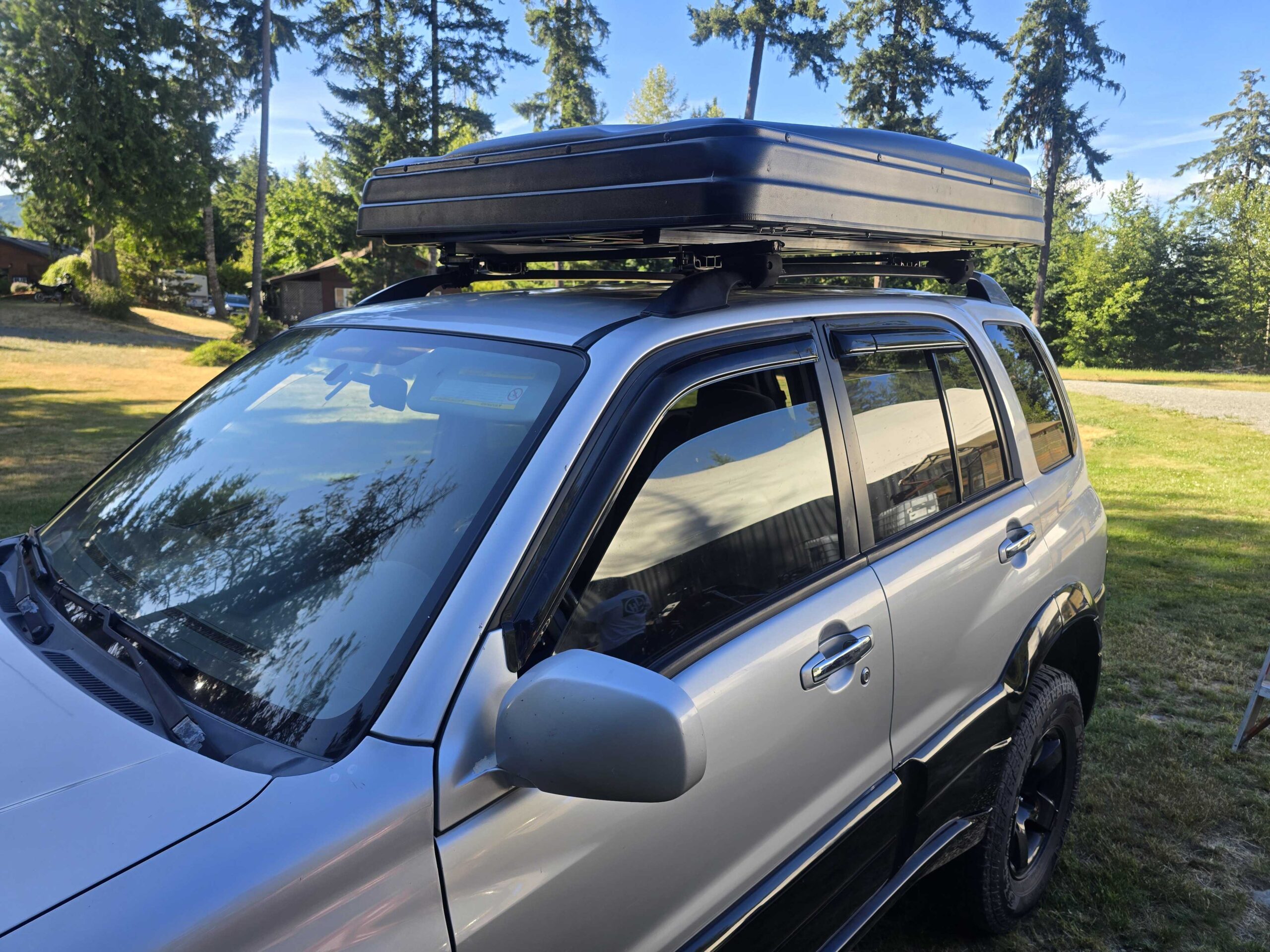
If your vehicle has factory side rails running the length of the roof, you’re working with the most straightforward starting point. Rails give cross bars a built-in, engineered attachment point — though there’s still a right way and a wrong way to match a system to them.
Flush rails vs. raised rails
Roof rails show up in two forms, and knowing which one you have matters before you shop:
Flush rails sit directly against the roof, with no gap underneath.
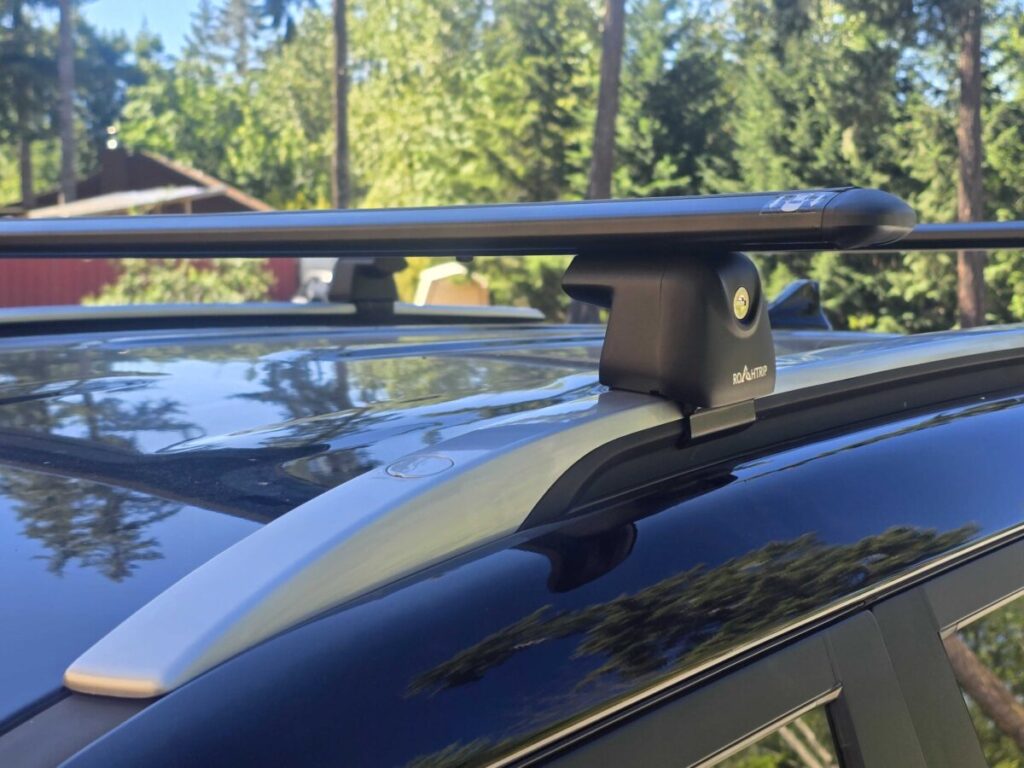
Raised rails sit above the roofline, with a visible gap you could fit a finger through
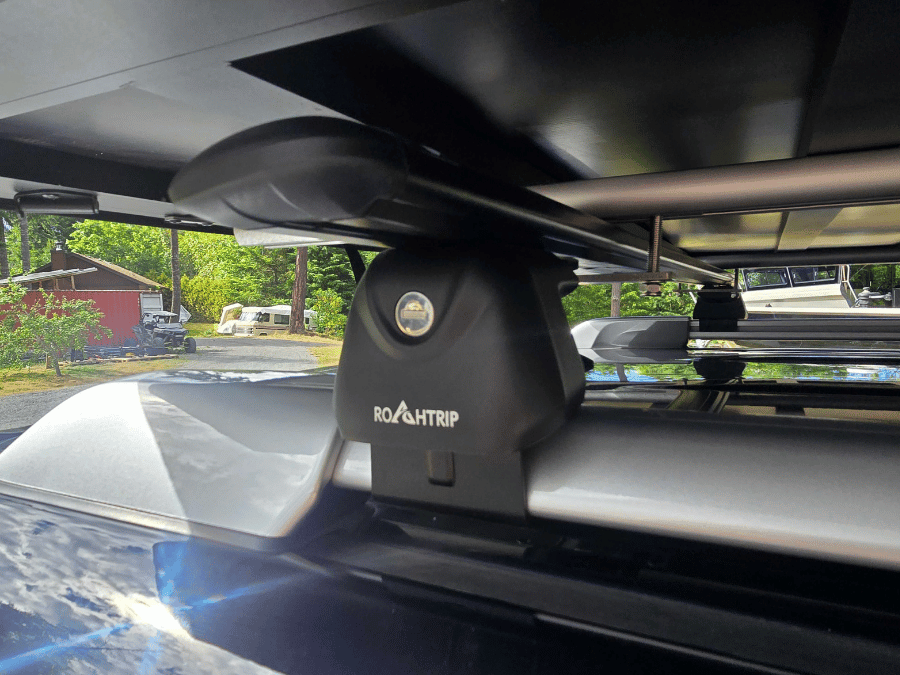
How clamps work with flush rails
Since flush rails leave no gap, cross bars can’t clamp underneath the way they would with raised rails. Instead, flush-rail systems typically rely on one of two methods:
- Track-and-clip systems that lock into a built-in channel along the rail (standard on many newer vehicles with integrated tracks)
- Podium-style mounts that attach at specific points using vehicle-specific brackets
Before you order, check:
- Whether your flush rails include a built-in track (look for a narrow slot running along the rail) — this determines the mounting hardware you’ll need
- That load ratings match your intended use (cargo box, bikes, or rooftop tent — static rating matters most for tents)
- Bar spacing compatibility with whatever accessory you’re planning to add, since some racks and boxes require a minimum or maximum spread
- Whether locking hardware is included, if security is a priority
Installing them
Flush rail systems are typically simple installs — most bolt or clip into place without any drilling, and a full setup usually takes 20–40 minutes with basic tools. Stick to the manufacturer’s torque spec; overtightening on plastic rail parts is a common mistake that’s easy to avoid.
Bottom line: flush rails make cross bar shopping easier, as long as you confirm upfront whether your rail has a built-in track or needs a podium mount. Get that right and this becomes one of the simplest upgrades for your rig.
Have your year, make, and model on hand? We’ll confirm which mounting style your flush rails need before you buy.