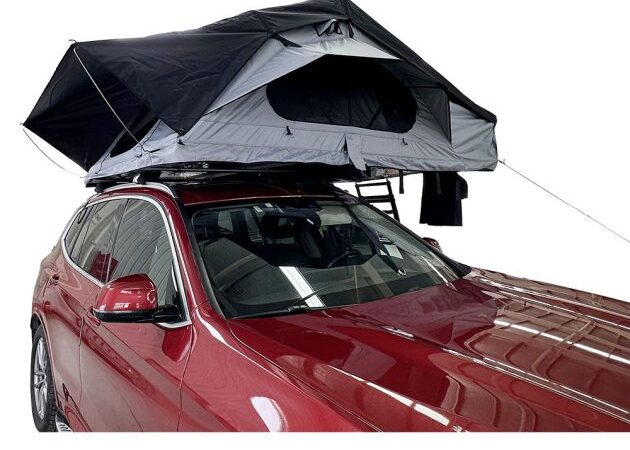

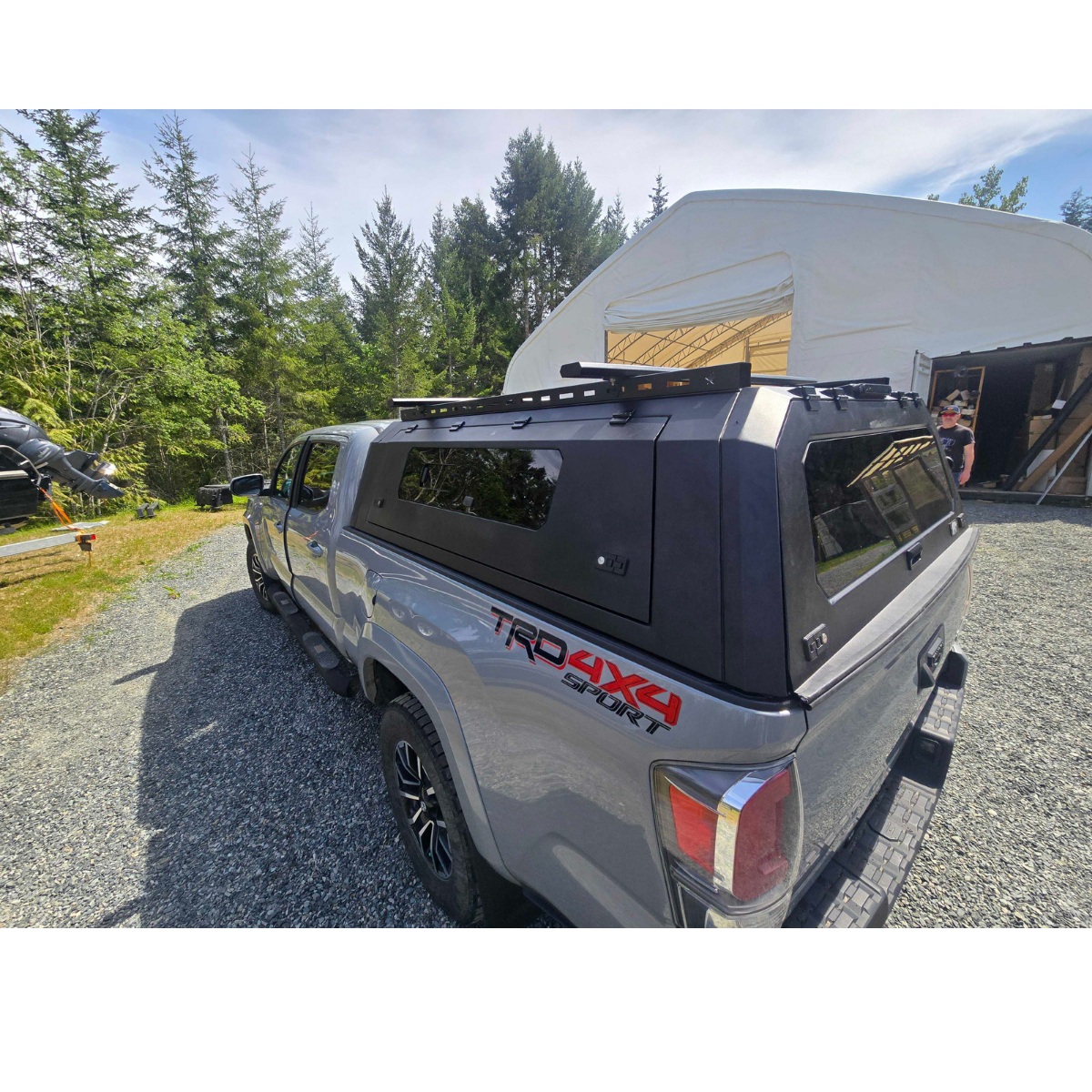
If you’re building an overland rig or simply want a more capable camping setup on your truck, the canopy you choose matters more than most people realize. It’s not just about aesthetics or price — it’s about structural integrity, weather performance, long-term durability, and whether your canopy can safely and reliably support a rooftop tent.
The two most common options are aluminum and fiberglass. Both have been around for decades. Both have their advocates. But when it comes to pairing a canopy with a rooftop tent for serious overlanding, camping, or year-round use in Canada and the northern US, the differences between them are significant.
This guide breaks it all down so you can make the right call for your build.
What Is an Aluminum Truck Canopy?
An aluminum truck canopy is a hard shell enclosure built from extruded or welded aluminum framing, typically with aluminum or composite panels. They’re engineered for strength, load-bearing capacity, and longevity. Most purpose-built overland canopies on the market today — including the most popular options in Canada — are made from aluminum.
Aluminum canopies are common across work trucks, overland builds, hunting rigs, and expedition vehicles. They’re designed to be functional above all else, with lockable doors, roof load ratings, and modular configurations that let you build out the interior for your specific use case.
What Is a Fiberglass Truck Canopy?
A fiberglass truck canopy, often called a fiberglass cap or topper, is a lightweight shell molded from fiberglass-reinforced plastic. They’re typically painted to match the truck’s factory color, giving them a cleaner, more integrated look straight from the factory.
Fiberglass caps have been the default choice for truck owners who want basic weather protection and a tidy appearance without spending heavily. They’re widely available, often cheaper upfront, and come in a range of styles from low-profile to high-roof configurations.
The Core Difference: Structure and Load Capacity
This is where the comparison gets critical for anyone planning to mount a rooftop tent.
A rooftop tent — even a lightweight soft shell model — adds significant static and dynamic load to whatever it’s mounted on. You’re looking at anywhere from 30 kg for a compact soft shell tent up to 80 kg or more for a hard shell unit, plus the weight of occupants moving in and out. That load is concentrated on the roof of your canopy, transferred through the crossbars or rack into the canopy frame.
Aluminum canopies are engineered to handle this. The extruded aluminum frame is rigid, consistent in strength, and designed with load-bearing in mind. Most quality aluminum canopies carry manufacturer-approved roof load ratings that explicitly support RTT mounting.
Fiberglass caps are not. The roof of a fiberglass cap is a molded shell — not a structural frame. It’s designed to keep rain out, not to support a person sleeping two metres off the ground. Mounting an RTT on a fiberglass cap without significant reinforcement risks cracking the roof, stressing the body seams, and potentially causing a dangerous failure on the road or at camp.
This is the single most important reason overland builders choose aluminum over fiberglass when a rooftop tent is part of the plan.
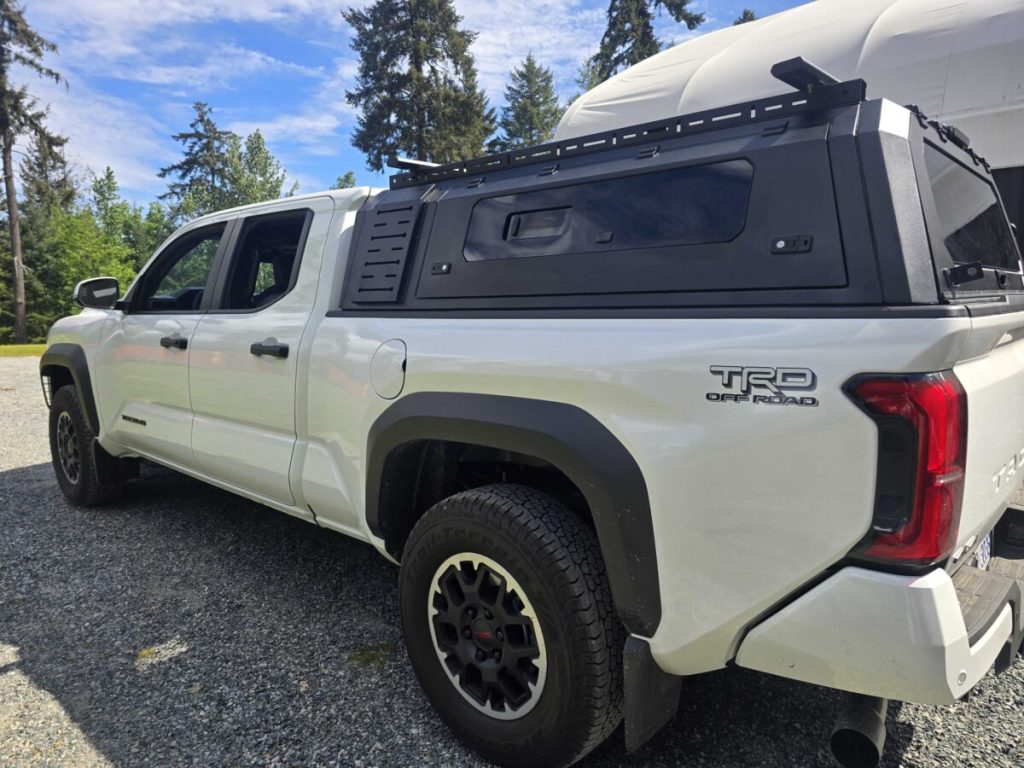
Aluminum vs Fiberglass: A Direct Comparison
Rooftop Tent Compatibility
Aluminum canopies are purpose-built for RTT mounting. Load ratings are clear, crossbar mounting points are integrated, and the structure handles dynamic loads without flexing. Fiberglass caps require reinforcement before any RTT should be mounted on them, and even then most manufacturers will not endorse it.
Structural Strength
Aluminum wins. Extruded aluminum framing provides a rigid, consistent load path from the RTT through the canopy and into the truck bed. Fiberglass is strong in compression but brittle under point loads and repeated stress cycles — exactly the conditions an RTT creates.
Weight
Fiberglass has a slight edge here. A fiberglass cap is typically lighter than an equivalent aluminum canopy. However, the difference is often overstated. A quality aluminum canopy built on a modern extruded frame is lighter than older welded steel alternatives, and the weight difference versus fiberglass rarely exceeds 15 to 20 kilograms on a comparable size unit.
Weather and Corrosion Resistance
Aluminum does not rust. Fiberglass does not rust either, but it does crack, fade, and delaminate over time — particularly in freeze-thaw conditions common across Canada. A crack in a fiberglass cap is a leak. Aluminum canopies seal consistently and hold up to repeated exposure to road salt, moisture, and UV without degrading structurally.
Repairability
Aluminum canopies are easier to repair. A dent can often be straightened. A damaged panel can be replaced. Fiberglass repairs require gelcoat matching, grinding, and resin work — and the finish rarely looks factory original afterward. A cracked fiberglass cap in a remote location is a serious problem. A dented aluminum canopy still keeps your gear dry.
Customization and Modularity
Aluminum canopies are far more modular. Interior drawer systems, side-opening doors, roof racks, lighting mounts, and vent fans all integrate cleanly into aluminum frames. Fiberglass caps are largely static — you can add a few accessories, but the structure doesn’t accommodate the same level of build-out.
Appearance
Fiberglass has traditionally had the edge on looks, particularly when color-matched to the truck. Aluminum canopies tend to have a more utilitarian, functional aesthetic. That said, modern powder-coated aluminum canopies look excellent on overland builds, and many truck owners prefer the blacked-out or matte finish of an aluminum canopy over a paint-matched fiberglass cap.
Long-Term Value
Aluminum holds its value better. A quality aluminum canopy lasts the life of the truck and often transfers to the next vehicle. Fiberglass caps age visibly — fading, cracking, and yellowing — and have limited resale value after several years of use.
Cost
Fiberglass caps are typically cheaper upfront. Aluminum canopies cost more at the point of purchase, but the gap narrows significantly when you factor in RTT compatibility, accessories, durability, and resale value over a five-to-ten-year ownership horizon.
Which Is Better for Overlanding in Canada?
For Canadian overland builds, aluminum is the clear choice. Here’s why.
Canadian winters are brutal on fiberglass. Freeze-thaw cycles stress the material repeatedly, accelerating cracking at seams and mounting points. Road salt corrodes exposed fasteners and hardware. Temperature extremes cause fiberglass to expand and contract in ways that loosen seals and create leaks over time.
Aluminum handles all of this without complaint. It doesn’t absorb moisture, it doesn’t crack in the cold, and it doesn’t degrade under road salt exposure. For year-round use from BC to Ontario to Nova Scotia, an aluminum canopy simply performs better across every season.
Add in the RTT compatibility requirement, and for Canadian overland builders there really isn’t a meaningful decision to make — aluminum is the correct choice.
When Does Fiberglass Make Sense?
Fiberglass caps still make sense in specific situations. If you’re using your truck primarily for light-duty hauling, keeping the truck clean from the elements, or want a color-matched appearance for everyday use without any intention of mounting a rooftop tent or building out a serious overland rig — a fiberglass cap delivers good value.
They’re also worth considering if you’re on a strict initial budget, plan to use the canopy for a short period, or are buying used and want basic weather protection without the investment of an aluminum build.
Just don’t mount a rooftop tent on one.
The Verdict
For rooftop tent compatibility, overlanding, hunting, fishing, and year-round use in Canadian conditions — aluminum truck canopies win on every metric that matters.
They’re structurally sound enough to carry an RTT safely. They handle Canadian winters without cracking or leaking. They’re modular enough to build out into a fully equipped overland setup. And they hold their value over years of hard use in a way that fiberglass simply cannot match.
Fiberglass caps have their place — but that place is not on a rig with a rooftop tent bolted to the roof.
If you’re serious about your overland build, invest in an aluminum canopy. Your rooftop tent, your gear, and your sleep will thank you.
Ready to find the right aluminum canopy for your truck? Browse our full range of aluminum truck canopies and rooftop tents here — matched to your exact make and model.