
There’s a moment every rooftop tent owner remembers — the first night they climbed up, zipped the door closed, and realized they were sleeping above the forest floor with nothing but a thin shell of canvas between them and the stars. It’s a different kind of camping. Quieter. Faster. More freeing.
In Canada, that feeling is multiplied a hundredfold.
With over 9 million square kilometres of wilderness, millions of hectares of accessible Crown land, and a road network that reaches into some of the most spectacular terrain on earth, Canada is one of the best countries in the world for rooftop tent camping. Whether you’re threading dirt roads through the British Columbia Interior, waking up above the fog on Vancouver Island, or chasing the fall colours across the boreal forest of Northern Ontario, a rooftop tent transforms how you move through this country.
This guide covers everything you need to know — from choosing the right setup for your truck or SUV, to camping in real Canadian conditions, to finding spots that will genuinely take your breath away. If you’re new to rooftop tents, or just starting to explore the overlanding world, you’re in the right place.
Why Rooftop Tents Have Exploded in Canada
The overlanding and overland camping community in Canada has grown dramatically over the past five years. Canadians are increasingly looking for self-sufficient, vehicle-based adventure — and for good reason. Remote camping in Canada often means rough access roads, wet ground, wildlife, and weather that can flip on you within an hour. A rooftop tent addresses most of those concerns at once.
Here’s why they work so well in a Canadian context:
Speed of setup. A hardshell rooftop tent can be open and ready in under two minutes. After a four-hour drive down a forest service road, the last thing you want to do is wrestle tent poles in fading light. Flip the latches, push it open, and you’re done.
Off the ground — for good reason. In bear country — which includes most of British Columbia, Alberta, Yukon, and significant parts of Ontario and Quebec — keeping yourself elevated and keeping your sleeping area scent-free is a meaningful advantage. You’re not sleeping on the ground where animals travel. Your food should still be stored separately in bear canisters or a locked vehicle, but the tent itself is one less concern.
Wet ground is not your problem. Canada is a wet country. If you’ve ever set up a ground tent on a Vancouver Island beach in October, you know the scene: puddles inside the tent fly by 2am, wet sleeping bag corners, soggy gear. A rooftop tent sits above all of it. You can park on a muddy forest service road in a downpour and sleep completely dry.
You can camp almost anywhere your vehicle can go. This is the one that changes everything for overlanders. Canada has an enormous network of Forest Service Roads (FSRs), resource roads, and Crown land that’s open to camping with no reservation required. A rooftop tent turns your vehicle into a mobile basecamp — wherever the truck goes, home goes with it.
Understanding Crown Land Camping in Canada
One of the biggest advantages Canadian campers have over their American counterparts is Crown land. Crown land is public land owned by the provincial or federal government — and in most provinces, you’re legally permitted to camp on it for free, typically for up to 21 consecutive days in one location.
This opens up an enormous amount of Canada for rooftop tent camping that simply doesn’t exist in most other countries.
Province-by-province quick overview:
– British Columbia: Crown land camping is widely available. Most FSRs pass through Crown land. Check the BC Recreation Sites and Trails website for managed sites, or free-camp within FSR corridors.
– Alberta: Free camping is available on public land administered by Alberta Forestry. The Eastern Slopes are particularly popular with the overlanding community.
– Ontario: Crown land camping is permitted in most of the province outside of organized municipalities. No permit required for stays under 21 days.
– Saskatchewan & Manitoba: Large swaths of Provincial Forest are open to free camping.
– Yukon & Northwest Territories: Vast Crown land, some of the most remote camping on earth, and generally very permissive rules — though leave-no-trace practices are critical.
Always check current regulations before heading out. Rules vary by province and can change seasonally due to fire risk or wildlife activity.
A rooftop tent setup is ideal for Crown land camping — you’re self-sufficient, mobile, and you leave minimal impact.
Choosing the Right Rooftop Tent Setup for Canada
Hard Shell vs. Soft Shell Rooftop Tents
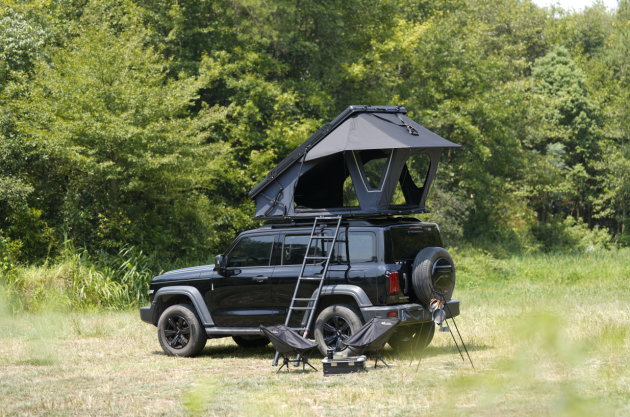
Hard shell rooftop tents are the workhorses of the Canadian camping scene. They’re built with a rigid ABS or fibreglass shell that opens and closes fast, sheds rain and snow well, and has a low profile on the roof for highway driving. They’re more expensive, but if you’re camping frequently or doing long-distance overlanding trips, the durability and convenience are worth it.
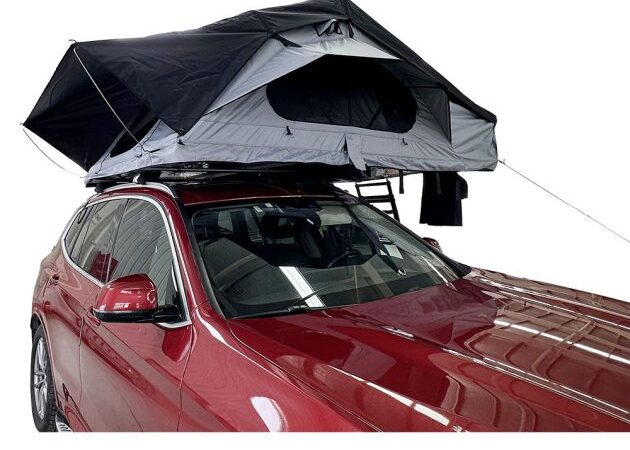
Soft shell rooftop tents offer more sleeping space for the money. They typically telescope out on a fold-over ladder system and can sleep two people comfortably — sometimes three. They cost less than hard shells but take longer to set up and take down, and the fabric shell needs more attention in wet conditions. For occasional weekend campers or families looking to get started without a major investment, a quality soft shell is a great entry point.
Rooftop Tents for Trucks
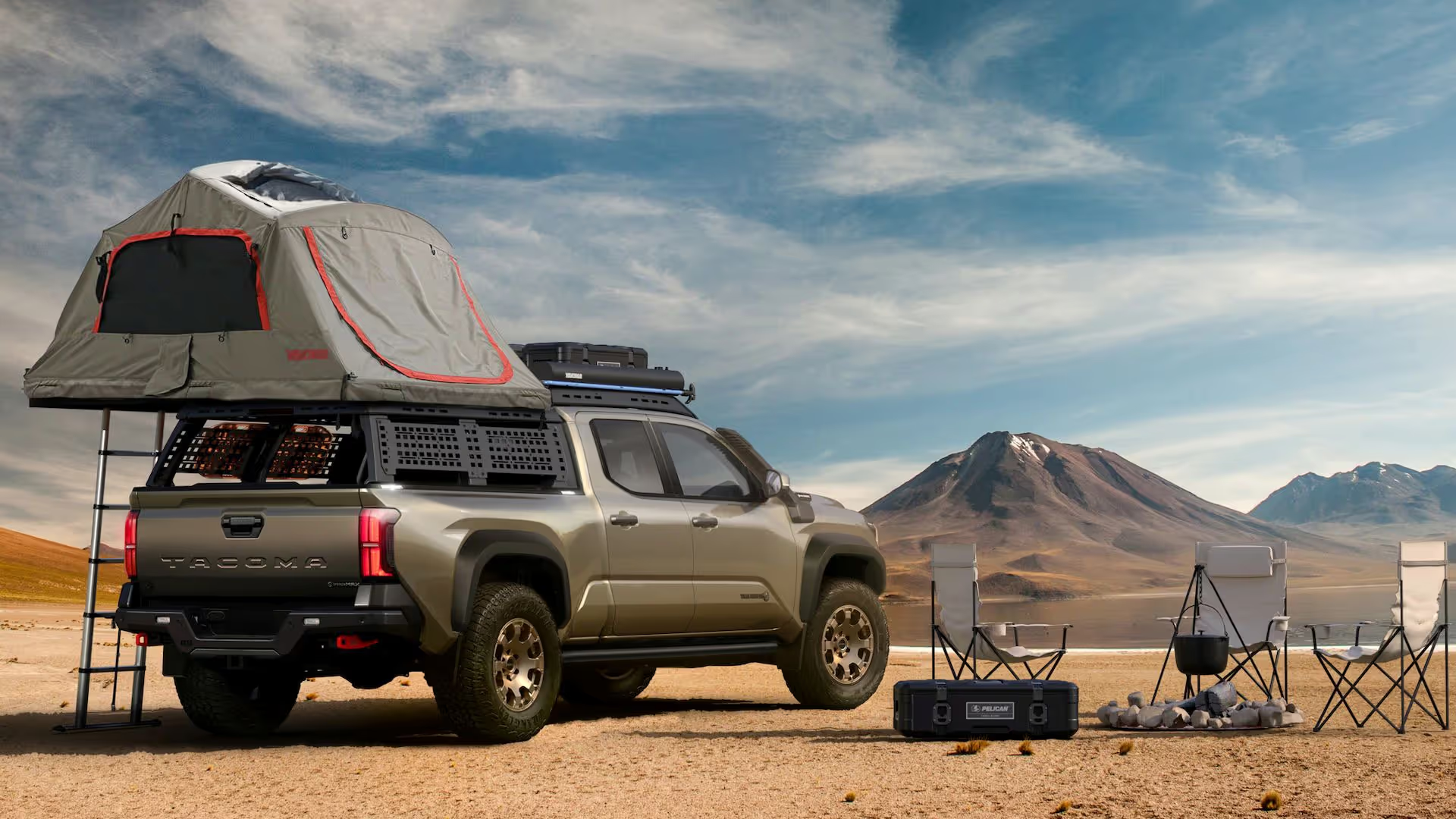
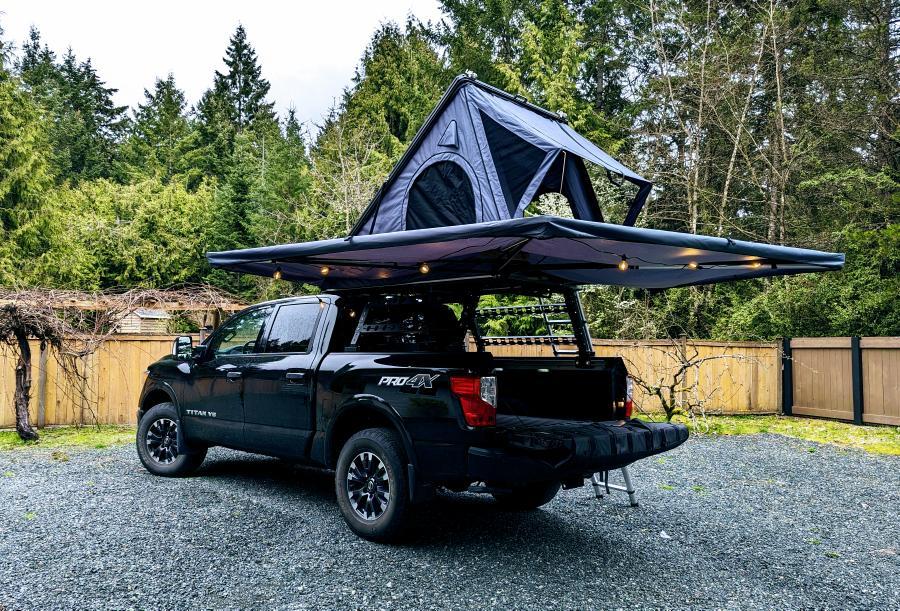
Trucks are the overlander’s platform of choice in Canada, and for good reason. A full-size truck — whether it’s a Ford F-150, RAM 1500, Chevy Silverado, or Toyota Tundra — gives you a long bed that can carry an enormous amount of gear while a rooftop tent sits on a bed rack system above it.
A truck bed rack allows you to mount the tent over the bed, keeping the interior of the truck accessible for storage, a fridge, water tanks, or a sleeping platform for kids. It also raises the tent higher, giving you better views and better airflow in summer.
Mid-size trucks like the Toyota Tacoma, Ford Ranger, and GMC Canyon are hugely popular in the overlanding community because they’re more nimble on tight FSRs while still carrying significant load.
Key things to check for truck setups:
– Dynamic roof load rating (how much weight your roof or rack can carry while driving — usually between 75–200 lbs depending on the vehicle)
– Static load rating (different, and usually much higher — this is what matters when the vehicle is parked and you’re sleeping in the tent)
– Whether you need a bed rack, tonneau rack, or cab-height rack depending on your tent model
👉 Shop truck bed racks and overland rack systems Canada
Rooftop Tents for SUVs
SUVs — from the Toyota 4Runner and Land Rover Defender to the Ford Bronco and Jeep Wrangler — are equally popular rooftop tent platforms. The advantage of an SUV is interior access and driver comfort; the trade-off is usually a lower load rating and less cargo capacity than a truck.
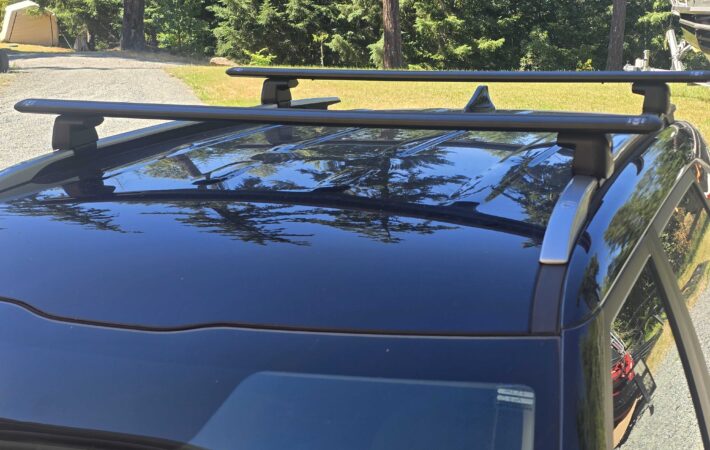
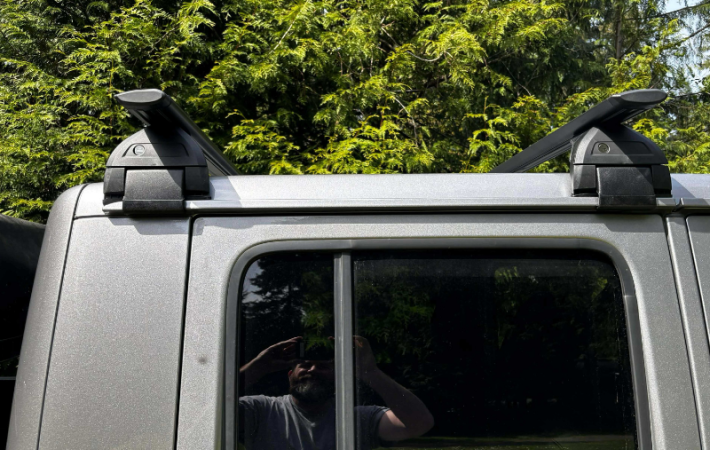
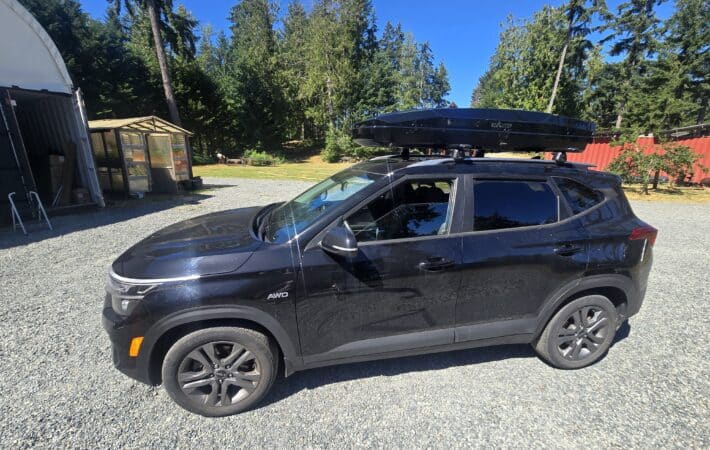
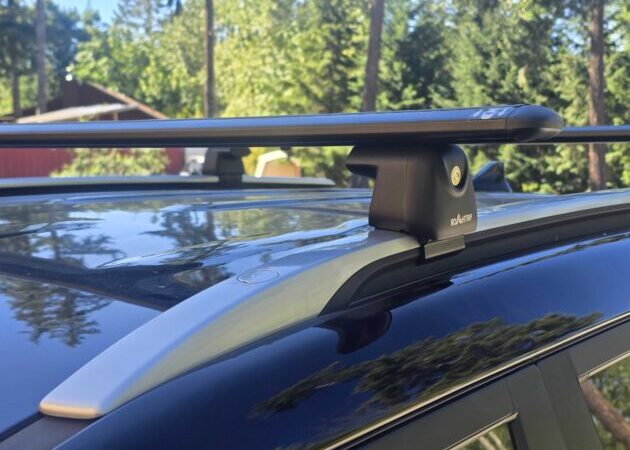
For SUV setups, you’ll typically install a set of **crossbars** (if not already included) and then a roof rack platform or load-rated crossbar system rated for your tent’s weight.
Popular roof rack brands in Canada include Rhino-Rack, Thule, Yakima, and ARB — all of which have fitment options for most common SUVs. Always verify weight ratings before purchasing, and have the tent weight plus gear in mind (most rooftop tents weigh between 45–80 kg depending on the model).
👉 Browse crossbar and roof rack systems
Essential Gear for Rooftop Tent Camping in Canada
A rooftop tent is the centrepiece, but your system is only as good as what supports it. Here’s what you need to camp comfortably across Canada’s range of conditions:
The Non-Negotiables
Bedding for the tent. Most rooftop tents come with a mattress included. You’ll want high-loft sleeping bags rated for at least -10°C if you’re camping in shoulder seasons, or a quality camp quilt system. Rooftop tents can feel cold at night because the mattress platform is elevated and exposed on all sides — good insulation matters.
A quality annex or awning.If you’re camping in rainy British Columbia or the Pacific coast, you’ll spend a lot of time under shelter without one. A **270° awning** attached to the side of your vehicle gives you a covered kitchen, gear staging area, and social space in almost any weather. This is one of the best investments you can make for your overall camp setup.
Lighting. String lights inside the tent plus a solid headlamp per person. Rooftop tent life involves a lot of climbing the ladder in the dark — a hands-free headlamp is non-negotiable.
Power. A portable power station or a secondary battery system in your truck keeps your phone, camera, and fridge running. For longer trips, a rooftop solar panel paired with a dual-battery setup is the overlander’s standard.
Recovery gear. If you’re venturing onto FSRs or backcountry roads, bring a traction board set, a hi-lift jack, and a tow strap at minimum. A MaxTrax or TRED Pro board has saved countless overlanders from a very long walk out.
Recommended Add-Ons for Canadian Conditions
A rooftop tent annex room. Some tents accept an annex room that zips onto the tent and extends down to the ground, creating an enclosed changing area or extra sleeping space. Great for families or for wet conditions where you want a sheltered transition zone.
Bear spray — always. Regardless of how elevated your sleeping position is, bear spray should be on your person any time you’re hiking around camp. Canada’s bear population is healthy and widespread; respect it.
A satellite communicator. In remote areas — and many Crown land camping spots qualify — cell service doesn’t exist. A Garmin inReach or SPOT device lets you send location updates and call for help if things go wrong.
Insulated water storage. Canada’s temperature swings mean water can freeze in your lines or containers overnight in early spring and fall. An insulated water tank or jug inside the vehicle prevents this problem.
The Best Regions for Rooftop Tent Camping in Canada
British Columbia: The Crown Jewel
BC is arguably the best rooftop tent camping destination in Canada. The province has thousands of kilometres of Forest Service Roads, dozens of managed recreation sites that are free or low-cost, and landscapes that range from coastal rainforest to desert canyon to high alpine.
Standout areas include the Chilcotin region west of Williams Lake (remote and breathtaking), the Similkameen and Okanagan highlands (drier, sunnier, and spectacular for fall camping), the Sea to Sky corridor north of Squamish, and the north end of Vancouver Island for coastal old-growth and deserted beaches.
The Sunshine Coast and Vancouver Island get significant rainfall — bring that waterproof awning and treat your soft shell tent annually if that’s your setup.
Alberta: Mountains and Prairie Edge
The Eastern Slopes of the Rockies — the area east of the parks, before the open prairie — is Alberta’s overlanding heartland. The Ghost Wilderness Area, Kananaskis Country, and the Crowsnest Pass corridor are all within a few hours of Calgary and offer excellent Forest Service camping with rooftop tent setups.
Note that Banff and Jasper National Parks require you to stay in designated campgrounds — you won’t be free-camping on Crown land inside the park boundaries. But just outside the park gates, the situation changes dramatically.
Northern Ontario and Quebec
The boreal forest camps differently. Long summer days, canoe routes accessible by road, incredible fall colour from mid-September, and lakes so clean and remote you’ll feel like you’ve slipped through a crack in time. FSR networks through Northern Ontario are extensive, particularly north and west of Sudbury and in the Algoma Highlands.
Quebec’s Laurentides, Abitibi, and lower North Shore offer similar solitude with the added charm of French-Canadian camping culture — generally more relaxed, social, and very food-forward.
Yukon and the North
This is the frontier for serious overlanders. The Alaska Highway, Dempster Highway, and Canol Road offer days-long drives through completely unpopulated wilderness. You’ll need a self-sufficient vehicle setup, a solid spare parts kit, and full fuel load management. But the payoff — midnight sun, Dall sheep on the road, rivers no one has named — is unlike anywhere else on earth.
Camping in Real Canadian Weather
Canada’s weather can be extreme, fast-changing, and very regional. Here’s how to think about it for rooftop tent camping:
Rain: The west coast, including most of BC and the coast of the Maritimes, is wet. Waterproof your gear before your first trip. Most quality rooftop tents (especially hard shells) handle rain well, but check the seams on any soft shell and re-treat with a DWR spray annually.
Wind: Open prairie and exposed ridge campsites can see sustained high winds. Hard shell tents handle this better than soft shells, which can flap and sound alarming in big gusts. Position your vehicle as a windbreak when possible.
Cold: Canada gets cold — even in August in the mountains. A tent rated to -10°C may not be enough for high-elevation camping in Banff or the Yukon in September. Layer your sleeping system and don’t forget that heat rises out of the tent roof, so insulated rooftop tent covers or mattress thermal liners make a real difference.
Snow: Shoulder season trips in the mountains mean unexpected overnight snow is possible even in late spring and early fall. Hard shell tents handle snow loads far better than soft shells, which can sag under heavy accumulation.
Tips for First-Time Rooftop Tent Campers
Practice at home first. Set up your tent in the driveway. Time yourself. Work out the ladder height adjustment and the bedding deployment before you’re doing it at 9pm on a gravel road.
Choose your campsite with the tent in mind. You need level ground — or close to it. A slight slope is liveable; anything over 5–7 degrees and you’ll be rolling toward one end of the mattress all night. Use a phone level app to check your parking position and use vehicle levelling ramps if needed.
Manage condensation actively. Rooftop tents condense moisture from breath overnight, especially in coastal or humid environments. Open the windows and vents every morning and let the mattress breathe before you close up. A mesh-heavy tent design helps in summer; some hard shells have integrated ventilation channels.
Keep weight off the roofline while driving. Your roof or rack has a dynamic load rating while the vehicle is moving. Don’t exceed it — add up your rack, tent, and any gear on the roof, and make sure you’re under the limit. Remove anything you can store inside the vehicle before driving.
Plan your ladder situation. Rooftop tents require climbing a ladder every time you get in and out. In the middle of the night, in the dark, in socks, in a sleeping bag daze — this is where accidents happen. Keep the ladder clear, always have a light, and consider a small mat at the base.
Building Your Complete Overland Setup
A rooftop tent is the starting point, not the finish line. The overlanders who get the most out of Canada’s backcountry are running a complete system:
– Rooftop tent for sleeping
– Overland rack or bed rack for mounting and storage
– Crossbars for roof organization
– 270° or 180° awning for outdoor living space
– Portable fridge/freezer (12V compressor fridge) for real food on long trips
– Power system (dual battery, solar, or portable power station)
– Water storage (10–20L minimum for backcountry)
– Recovery gear (boards, hi-lift, tow strap)
– Navigation (paper maps + GPS — don’t rely on cell service)
You don’t need all of this on day one. Build gradually. Start with the tent and a rack, add an awning on your second trip, a fridge by year two. The community of overlanders in Canada is welcoming and generous with knowledge — there are active groups on Facebook, Reddit (r/overlanding), and local clubs in every major city.
Frequently Asked Questions
Is camping with a rooftop tent worth it in Canada?
Absolutely — especially for campers who go out more than a few times a year. The speed and comfort of a quality rooftop tent setup pays dividends quickly, and Canada’s Crown land system means you have near-unlimited free camping once you have the vehicle and kit to reach it.
Can I camp on Crown land with a rooftop tent anywhere in Canada?
Crown land availability varies by province. BC, Alberta, Ontario, and the territories all have large Crown land areas open to camping. Some provincial parks and national parks require designated sites. Always check current regulations with the relevant provincial ministry before heading out.
What’s the best vehicle for rooftop tent camping?
There’s no one answer — trucks (mid-size and full-size) are the most popular because of their load capacity and chassis strength, but SUVs from the 4Runner to the Bronco work excellently. The key is knowing your roof load ratings and matching the tent to the vehicle.
Do rooftop tents work in Canadian winters?
They can, but they’re not ideal for extreme cold without additional insulation. Some hardcore overlanders winter-camp in RTTs with upgraded sleeping systems and insulated tent covers. For most people, three-season use (spring through fall) is the sweet spot.
How much does a complete rooftop tent setup cost in Canada?
A soft shell tent starts around $1,200–$2,000 CAD. Hard shells typically run $2,500–$5,000+. Add rack and crossbar costs ($400–$1,500), and you’re looking at a full entry-level setup in the $2,000–$4,000 range.
Are rooftop tents safe in bear country?
Being off the ground is a meaningful advantage, but it’s not a complete solution. Store all food, cooking gear, and scented items separately in a locked vehicle or bear canister. Carry bear spray whenever you leave camp. Canada’s bear population deserves respect — common sense goes a long way.
Final Thoughts
Canada is one of the greatest road-tripping and overlanding countries on earth — and a rooftop tent is one of the best tools you can bring into it. The combination of Crown land access, spectacular scenery, and a growing overlanding community means there’s never been a better time to get set up and get out there.
Whether you’re starting with a budget soft shell on a crossbar system or building out a full expedition truck, the core experience is the same: park, open, climb in, and wake up somewhere remarkable.
👉 Browse all rooftop tents in Canada
👉 Shop overland racks and truck bed racks
👉 See awnings and platforms