
If you’ve spent any time building out an overland rig, you know that shade and shelter aren’t luxuries—they’re essentials. Whether you’re parked at a remote lake, cooking at camp, or waiting out a West Coast rainstorm, a good awning makes a massive difference.
While 270-degree awnings tend to get all the attention, 180-degree awnings are quickly becoming a go-to choice for many setups. They offer a smart balance of coverage, weight, cost, and versatility—especially for certain vehicle types.
In this guide, we’ll break down what a 180-degree awning is, what vehicles they’re best suited for, and how they compare to 90-degree and 270-degree options.
What is a 180 Degree Awning?
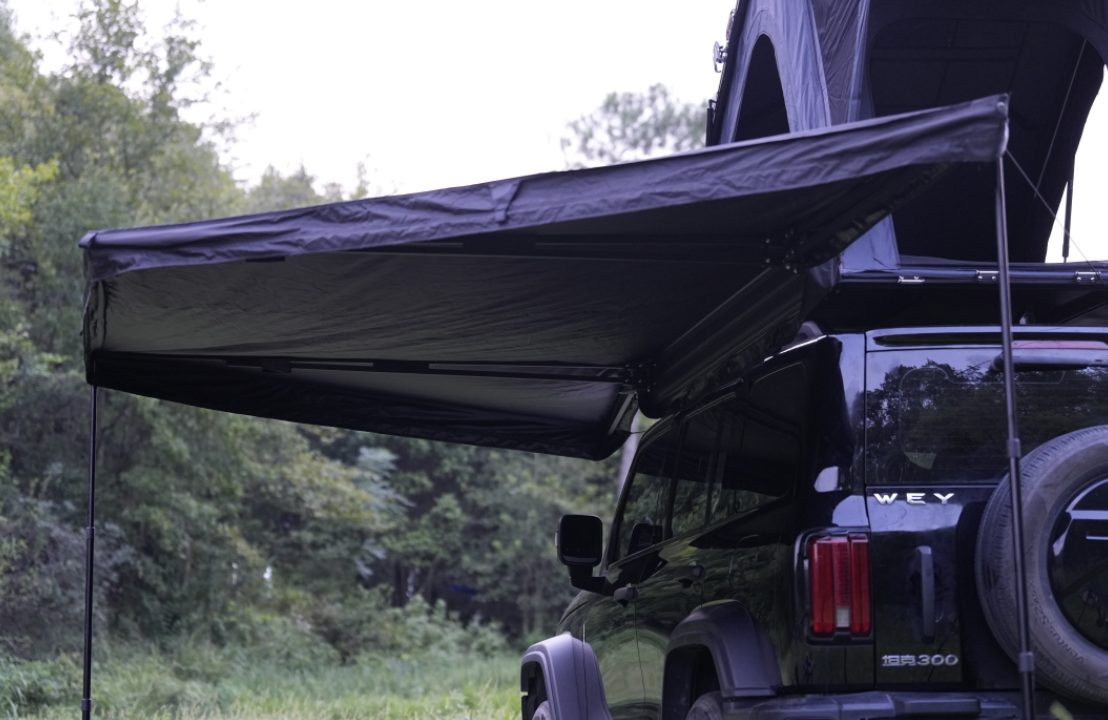
A 180-degree awning mounts to the side of your vehicle and swings out to provide coverage along the side and partially toward the rear. It creates a large, usable shaded area without wrapping fully around the back like a 270 awning.
Think of it as the sweet spot between a basic pull-out awning and a full wrap-around system.
If you want a real-world example, check out the
ArcShield 180 Degree Awning
—a clean, rugged setup designed for quick deployment and solid coverage without overcomplicating your rig.
What Vehicles Are 180 Degree Awnings Best For?
🚐 Vans (Sprinter, Transit, Promaster)
180-degree awnings are one of the best options for vans. Most van builds rely heavily on side access, sliding doors, and outdoor living space. A 180 awning creates a large, usable area right where you actually spend your time—beside the van.
Unlike a 270, you don’t have to worry about interference with rear ladders, bike racks, or door swing.
🚙 SUVs with Rear Hatch (4Runner, Tahoe, etc.)
If your vehicle has a rear hatch that lifts upward, a 180 awning pairs perfectly. You still get rear access while maintaining excellent side coverage. The hatch itself often acts as additional shelter, complementing the awning setup.
🛻 Trucks with Bed Racks or Canopies
For truck setups—especially Tacoma, Gladiator, and full-size trucks—a 180 awning works extremely well when mounted to a bed rack or canopy.
It provides coverage for your cooking area, gear storage, and entry point without adding unnecessary weight or bulk to the rear of the vehicle.
🚗 Lightweight or Daily Driver Builds
If you’re trying to keep things simple, clean, and functional, a 180 awning is a strong choice. It offers meaningful coverage without the size, cost, and complexity of a full 270 system.
180 vs 90 vs 270 Degree Awnings
90 Degree (Traditional Pull-Out Awnings)
- Coverage: Side only
- Setup: Simple, but often requires poles
- Best for: Casual use, budget setups
Downside: Limited coverage. You’re constantly chasing shade or dealing with rain blowing in from angles.
180 Degree Awnings
- Coverage: Side + partial rear
- Setup: Fast, often freestanding
- Best for: Balanced setups, vans, SUVs, trucks
Why they stand out: You get significantly more usable space than a 90-degree awning, without the weight and complexity of a 270.
270 Degree Awnings
- Coverage: Full side + rear wrap
- Setup: Larger, heavier
- Best for: Full-time overlanders, large rigs
Downside: More expensive, heavier, and can interfere with rear access depending on your setup.
Why Choose a 180 Degree Awning?
✔ Simplicity Without Sacrificing Coverage
You get a large, functional shelter area without dealing with a bulky, complex system. It’s a clean solution that works.
✔ Better Compatibility With Real-World Builds
Not everyone has a perfectly optimized overland rig. Roof racks, ladders, spare tires, and rear accessories can all get in the way of larger awnings. A 180 avoids most of these issues.
✔ Ideal for Everyday Use
If you’re using your vehicle for weekend trips, camping, or even day outings, a 180 awning hits the sweet spot. Quick setup, solid coverage, and easy to live with.
✔ Weight and Cost Advantage
Compared to 270 awnings, 180 models are generally lighter and more affordable—making them a smarter choice for many builds.
When a 180 Awning Might Not Be Enough
If your goal is full wrap-around coverage for extended trips or full-time living, a 270-degree awning may still be the better option. Especially if you want complete rear protection in all weather conditions.
But for most setups, especially those balancing daily driving and adventure use, a 180-degree awning delivers more than enough performance.
Final Thoughts
There’s no one-size-fits-all answer when it comes to awnings, but 180-degree awnings are one of the most practical and versatile options out there right now.
They’re especially well-suited for vans, SUVs with rear hatches, and truck builds where usability, simplicity, and clean design matter.
If you’re looking for a dependable, well-built option, take a look at the
ArcShield 180 Degree Awning
—it’s designed for real-world use and built to handle Canadian conditions.
At the end of the day, the best awning is the one that fits your setup—and actually gets used.